No, she isn't.
-------------------
Prevalence of Eating Disorders Among Males:
?? Approximately 10% of eating disordered individuals coming to the attention of mental health professionals are male
(Wolf, 1991; Fairburn & Beglin, 1990).
?? There is a broad consensus, however, that eating disorders in males are clinically similar to, if not indistinguishable from, eating disorders in females
(Margo 1987; Schneider & Agras, 1987; Crisp et al.,1986; Vandereycken & Van der Broucke, 1984).
Gender Differences Regarding Dieting and Body Shape:
?? A national survey of 11,467 high school students and 60,861 adults revealed the following gender differences
(Serdula et al., 1993):
?? Among the adults, 38% of the women and 24% of the men were trying to lose weight.
?? Among high school students, 44% of the females and 15% of the males were attempting to lose weight.
?? Based on a questionnaire administered to 226 college students (98 males and 128 females) concerning weight, body shape, dieting, and exercise history, the authors found that 26% of the men and 48% of the
women described themselves as overweight. Women dieted to lose weight whereas men usually exercised
(Drewnowski & Yee, 1987).
?? A sample of 1,373 high school students revealed that girls (63%) were four times more likely than boys (16%) to be attempting to reduce weight through exercise and caloric intake reduction. Boys were three times more likely than girls to be trying to gain weight (28% versus 9%).
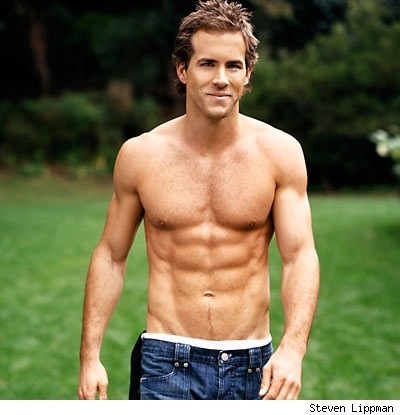
The cultural ideal for body shape for men versus women continues to favor slender women and athletic, V-shaped muscular men
(Rosen &Gross, 1987).
?? In general, men appear to be more comfortable with their weight and perceive less pressure to be thin than women.
A national survey indicated that only 41% of men are dissatisfied with their weight as compared with 55% of women; moreover, 77% of underweight men liked their appearance as opposed to 83% of underweight women.
Males were more likely than females to claim that if they were fit and exercised regularly, they felt good about their bodies. Women were more concerned with aspects of their appearance, particularly weight
(Cash, Winstead, & Janda, 1986).
Occupational Hazards:
?? Gymnasts, runners, body builders, rowers, wrestlers, jockeys, dancers, and swimmers are particularly vulnerable to eating disorders because their sports necessitate weight restriction (Andersen, Bartlett, Morgan, & Brownell, 1995).
It is important to note, however, that weight loss in an attempt to improve athletic success differs from an eating disorder when the central psychopathology is absent.
Media:
?? Nemeroff, Stein, Diehl, and Smolak (1994) suggest that males may be receiving increasing media messages regarding dieting, and ideal of muscularity, and plastic surgery options (such a pectoral and calf implants).
?? DiDomenico and Andersen (1988] found that magazines targeted primarily to women included a greater number of articles and advertisements aimed at weight reduction (e.g., diet, calories) and those targeted at men contained more shape articles and advertisements (e.g., fitness, weight lifting, body building, or muscle toning).
The magazines most read by females ages 18-24 had 10 times more diet content than those most popular among men in the same age group.
http://www.nationaleatingdisorders.org/nedaDir/files/documents/handouts/MalesRes.pdf
-----------------


 So yeah it's not my preference but what people perceive to be the preference of others. No one can be certain of another's preference unless they ask.